The Interview - Jeevan Gopalan
-
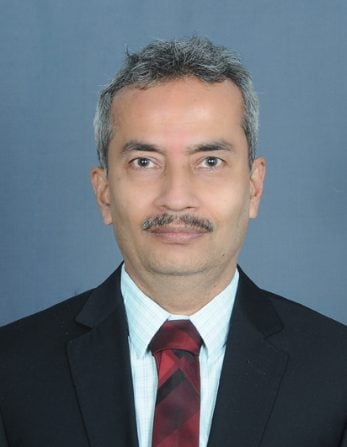 Jeevan Gopalan
| Follow
| Wednesday 4th of February 2026 06:04:41 AM (UTC)
 https://tinyurl.com/Jeevan-Gopalan-Author
What led you into writing?
I’ve loved writing ever since I was young. My mom used to tell us these incredible children’s stories about spirituality and courage, things that really stayed with me. I think that’s where my love for stories, and for the meaning inside them, really began. Honestly, I think words are this wild, powerful force. They can move people in every direction, make them laugh, cry, fall in love, get upset, feel hopeful, all of it. A writer has the power to shape the world, for better or worse.
I started writing seriously during a tough stretch, when I was questioning everything and saw life without any filters. I always knew about how powerful words could be, but going through something personal made me want to show people how we can face our own flaws and maybe even change them. I’ve read a ton of books on personal growth and social issues, but I wanted my own book to be a mix, something anyone could get into, even if they’re into romance, but still leave with something meaningful. I also wanted to do things my own way, not just follow every “rule” writers set. So I aimed for a book that’s a bit different, scientific, romantic, adventurous, all at once.
How does a typical day look?
I’ve worked full-time in manufacturing, mostly in senior roles, so my days start early. When I get home, I try to carve out about two hours to write, and weekends are when I go deep, six to eight hours if I can manage. Sure, it’s not always perfect, but if you love writing, you make time for it. Nothing really gets in your way.
When you're working on a book and a new idea pops up, should you pursue it immediately (also known as 'UP syndrome') or finish your current project first? What do you think is the best course of action?
No I don’t pursue it immediately, since I wouldn't want to give up on my ongoing project. Ideas and thoughts come to me when I'm writing, and they don't stop until I'm tired out. Thus, I would rather not abandon my ongoing project. The best course of action cannot be fixed as every writer writes in a unique style that suits their skills and advantages.
In what ways do your characters test your abilities?
Writing science fiction has its own challenges. The characters have to feel real, even if they aren’t human. So I spend a lot of time digging into the science behind everything. As the story expands, I bring in new characters that fit where things are headed. Aliens are especially tough, they only exist in our minds, so it’s a challenge to give them real personalities and believable ideas.
The hardest part? Making them more than just people with odd appearances. My story is different, though. The connections between humans and aliens are all rooted in science.
I won’t disclose specifics since it wouldn’t be fair to those who want to appreciate the reading experience
Tell us what you enjoy most about writing [genre].
It is the capacity to create something that doesn't exist, something that ought to exist, or the ability to alter something that oughtn't to be. Science fiction with the potential to be true.
What’s your setup?
I write on a laptop, usually sitting on the couch. Too much comfort actually makes it harder to focus, especially if I’m writing for a long time.
What lasting effects have your favorite authors had on your writing and style?
Since I was a kid, I read a lot of Robert Ludlum, John Grisham, Jack Higgins, Agatha Christie, Sidney Sheldon, Louis L Amour, John Grisham, Alistair MacLean, along with a bunch of comic books. The world is messy, full of evil and violence, but there’s always some goodness fighting back. That balance feels like it’s part of the universe. Those stories made me want to look for new adventures, things nobody else had written yet. That’s how I found my way into science fiction. Astronomy, especially, fills me with wonder. It’s humanity’s last great mystery, and honestly, the universe is so huge, we’ll never even scratch the surface. That means endless stories about aliens and new worlds, as long as the science feels real, not just all fantasy.
What do you do for inspiration?
Spirituality is my main source of inspiration. The big questions about why we’re here and what it all means really get my mind going. Spirituality brings hope, especially when things get tough. Every day, I set aside an hour for spiritual practice. It helps me reset.
What repeating themes do you find yourself pulling into your stories?
I keep coming back to the same ideas, especially in my book "MARGA: The Alien Code," which is told from a grandfather to his grandson. Sometimes I have to cut out those repeats, I guess I just really want to get certain messages across.
How do you wind down?
Balancing writing with a corporate job is definitely hard. I practice Pranayama and Yoga to relax. Sometimes I’ll watch movies, listen to music, or read science articles. My favorite thing is being outdoors, in the garden or a park, surrounded by trees and plants. That’s when I feel most at peace. Every writer needs that downtime, it’s how you recharge.
What sort of challenges do you regularly overcome while designing your world/settings
Writing about aliens and their world is no simple task. We still don’t have concrete proof they exist, so it can’t just be pure fantasy. I want readers to stop and wonder, “Hold on, could this actually be true, just hidden as fiction?” To reach that point, I had to dig deep, connecting ancient history and science meant a ton of research. But it paid off. I even got a review from someone questioning her own DNA after reading my book. My writing relies a lot on dialogue, but I’ve noticed that if only one character is speaking, the conversation dies out pretty fast.
What are you reading at the moment?
Honestly, not much these days. As a kid, I tore through over 5,000 books before I started working. But once I entered the corporate world, reading just faded away. Now that I’m back at work, any free time I have is spent writing or getting the word out about my own book.
What’s the most useful advice you could give to an aspiring authors?
If you’re hoping to write, here’s my advice: just get started. Don’t wait for the “right” time. Don’t let fear hold you back. Your words matter. My first book was published under a pen name. At that point, I had no idea about the publishing world or self-publishing. I went with self-publishing because, honestly, publishers rarely take chances on unknown authors and the process can drag on forever. So I did it all myself and learned a ton about publishing, marketing, and launching a book along the way. If I’d waited, I wouldn’t have learned any of that. That gave me the confidence to write my second book under my real name. I must have rewritten it eighteen times before I felt it was ready, since I couldn’t afford an editor. I even did all the formatting myself. Every step taught me something new, skills I never would’ve gained if I hadn’t just gone for it. That’s why I say: stop making excuses. If you love something, make it happen.
Good feedback helps you grow. But sometimes, critics are just dealing with their own problems. Look at what they say. Take what helps, ignore the rest, and don’t let it get in your head. You started writing because it’s your dream, and you deserve to follow it, even when it’s hard. Don’t give up.
People will always give advice based on their own experiences and feelings. But you’re writing your own story. Don’t change it just to make someone else happy.
If you self-publish, remember this: you can create something amazing, but readers won’t find it unless you promote it, and that usually takes money. But don’t let a lack of funds discourage you. Keep putting yourself out there, be patient, and keep going. That’s what I’m doing. Most of us don’t see success overnight, but if you keep at it, you’ll get there.
Tell us about the book you’re promoting.
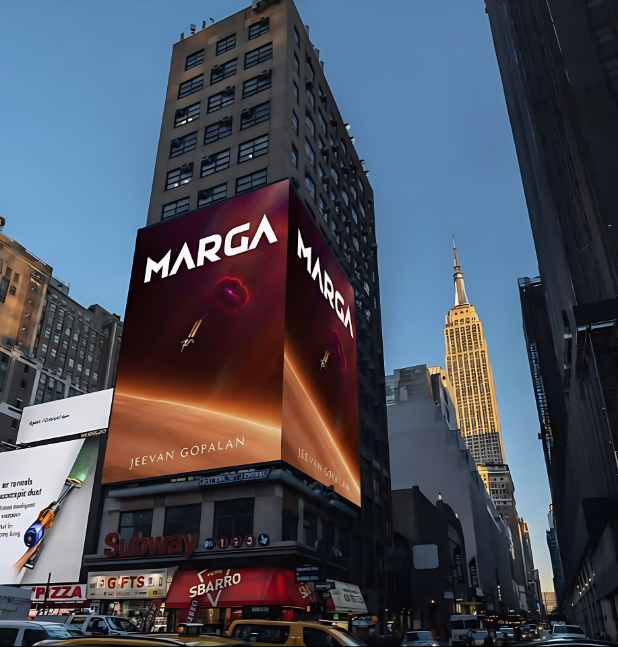
"MARGA" – The Alien Code, is unlike anything you've ever read. It has something for everyone, whether it be romance, mystery, fantasy, or science fiction.
Readers are captivated by the narrative, which explores undiscovered extraterrestrial histories and hidden knowledge encoded in DNA. We will discover ourselves untangling the strands of a secret past in a universe where the past and the cosmos are interwoven. Think of DNA as a library, with each strand being a page that whispers secrets about an intelligent species we weren't aware of. What if they developed into something beyond our grasp rather than disappearing?
We come across a love that transcends time, a bond that ties us to these mysterious creatures. Their legacy questions everything we thought we knew about the beginnings of humanity. Do we just add up our ancestors, or are we waiting to find a more profound truth? Redefining what it means to be human is the goal of this voyage, not simply learning about alien histories.
Here’s a brief glimpse into this book. Dr. Ingrid, a researcher at Vredefort, was astounded by her discoveries made from DNA samples of individuals of African descent. She was incredulous when she discovered a non-coding pseudo-gene in her sample, a code that had no match in any recognized human genome.
As an author, what critique has been the most challenging for you to receive? On the other hand, what compliment has been the most rewarding?
As an author the most challenging critique has been the readers' trust in a newly published self-published author.
Reader reviews proved to be the greatest complement:
1. Who would love to doubt that part of our DNA is from an alien species. Well it was uncomfortable but enjoyed the book. I give 5 stars to the book for the authors ability to scientifically able to do put me in a position to question my own DNA.
2. I don't understand how the book has been mentioned as Sci fiction Genre. Well the major part is so. But what I liked is how the author has smoothly added Romance, self help, social and economic and even spiritual issues into it. Readers don't realize that he has successfully added so much message into it.
3. I liked how the book transported me to the alien planet and way of life several million years ago, and then it brought me back to Earth 80,000 years ago. I was not aware that I was not with them but rather inside a book. Well, because the author was new to me, I had my doubts about the book. However, after reading it, I became aware of how we have preconceived notions and a stereotyped view of new writers. The book's cover page could have been more appealing, which is a drawback because readers are typically drawn to new books & authors by their covers.
